History
Nirartha and the rock
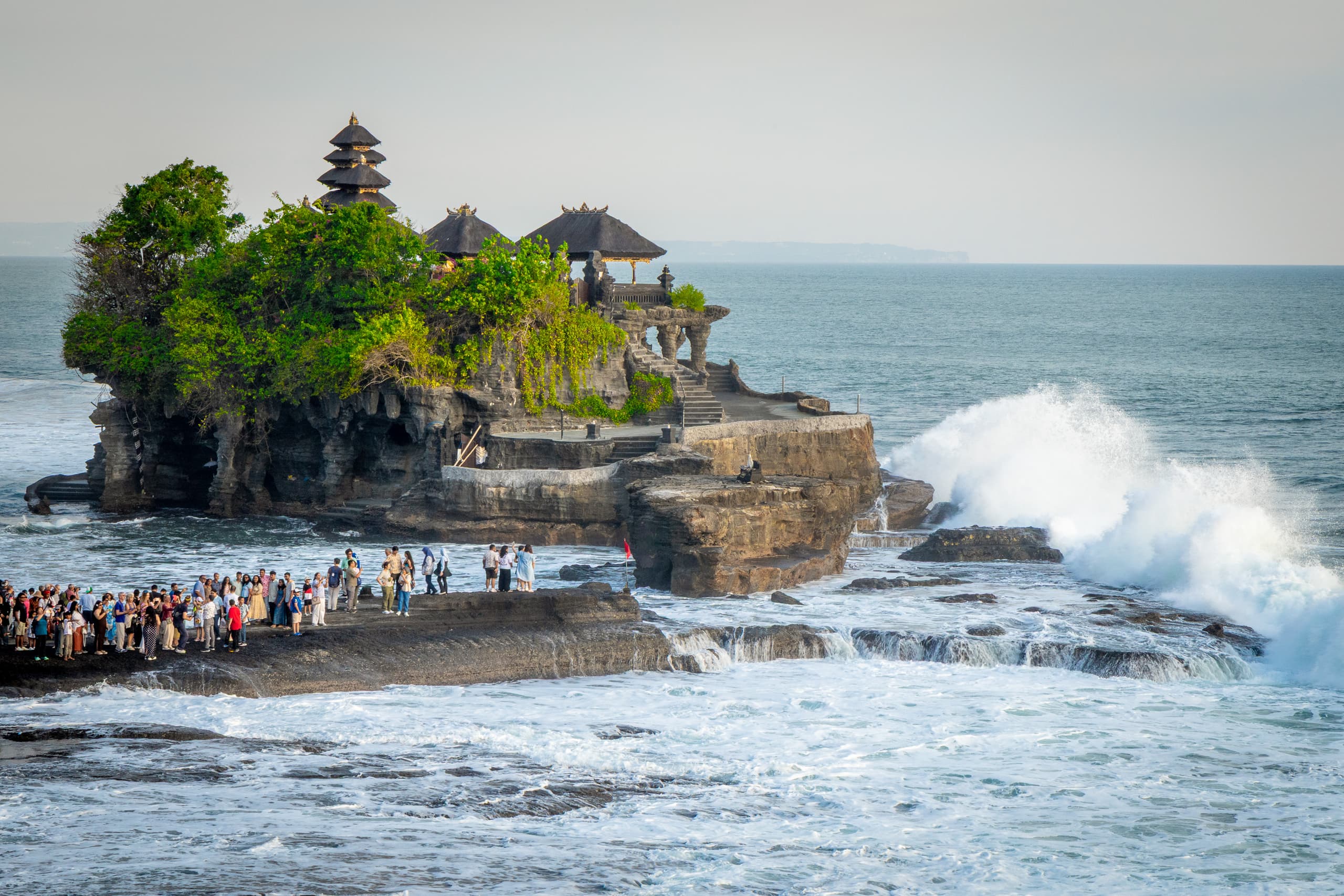
Pura Tanah Lot - “the temple of the land in the sea” - was founded in the 16th century by Dang Hyang Nirartha, the same wandering priest whose name attaches to Uluwatu. The story preserved by the local community is unusually specific: Nirartha was travelling along the west coast when he saw a beam of holy light over the offshore rock, and asked a local fisherman for shelter at the village of Beraban. He spent that night in meditation on the rock and afterwards instructed the villagers to build a shrine there to honour the spirits of the sea. By the time he left, Tanah Lot already had its first priest.
Saving the temple
By the early 1980s the rock holding up Pura Tanah Lot was crumbling. Coastal erosion had eaten away more than a third of its base, and the temple itself was in danger of collapsing into the surf. Between 1987 and 1997 the Japanese government funded a major restoration - a controversial one, because conservationists argued the engineering had effectively turned the natural outcrop into an artificial island.
Today around a third of what you see is reinforced concrete dressed to look like the original rock. The temple structure above has been faithfully rebuilt and continues to function as an active place of worship.
Culture & context
Bali’s chain of sea temples
Tanah Lot is one of seven sea temples - pura segara - strung along Bali’s southern and western coasts at intervals of roughly a day’s walk. The others include Pura Uluwatu, Pura Sakenan on the offshore islet near Sanur, and Pura Rambut Siwi further west. Together they form a protective spiritual ring against the malevolent spirits believed to come in from the open sea. Each is visible from the next on a clear day, and pilgrims traditionally travelled the entire circuit during the major festival of Galungan.
Myths & legends
The holy snakes
The cave beneath the temple is home to a population of striped sea snakes - Laticauda colubrina - that the priests have kept and tended for centuries. Local tradition holds that they were born from the sash Nirartha tossed into the water when he completed his meditation, and that they have guarded the temple ever since. Visitors can ask the cave-keeper for a blessing and a brief glimpse of one of the snakes for a small donation.
The priest who tried to drive him away
Not every villager welcomed Nirartha. The local priest at the time, Bendesa Beraban, saw the rising fame of this Javanese newcomer as a threat to his own authority and tried to have him expelled from the area. In the most famous version of the story, Nirartha responded by using his spiritual power to move the rock out into the sea, placing his shrine permanently beyond Beraban’s reach. Beraban is said to have eventually become a devotee, and his descendants are among the temple’s hereditary caretakers today.
What to see
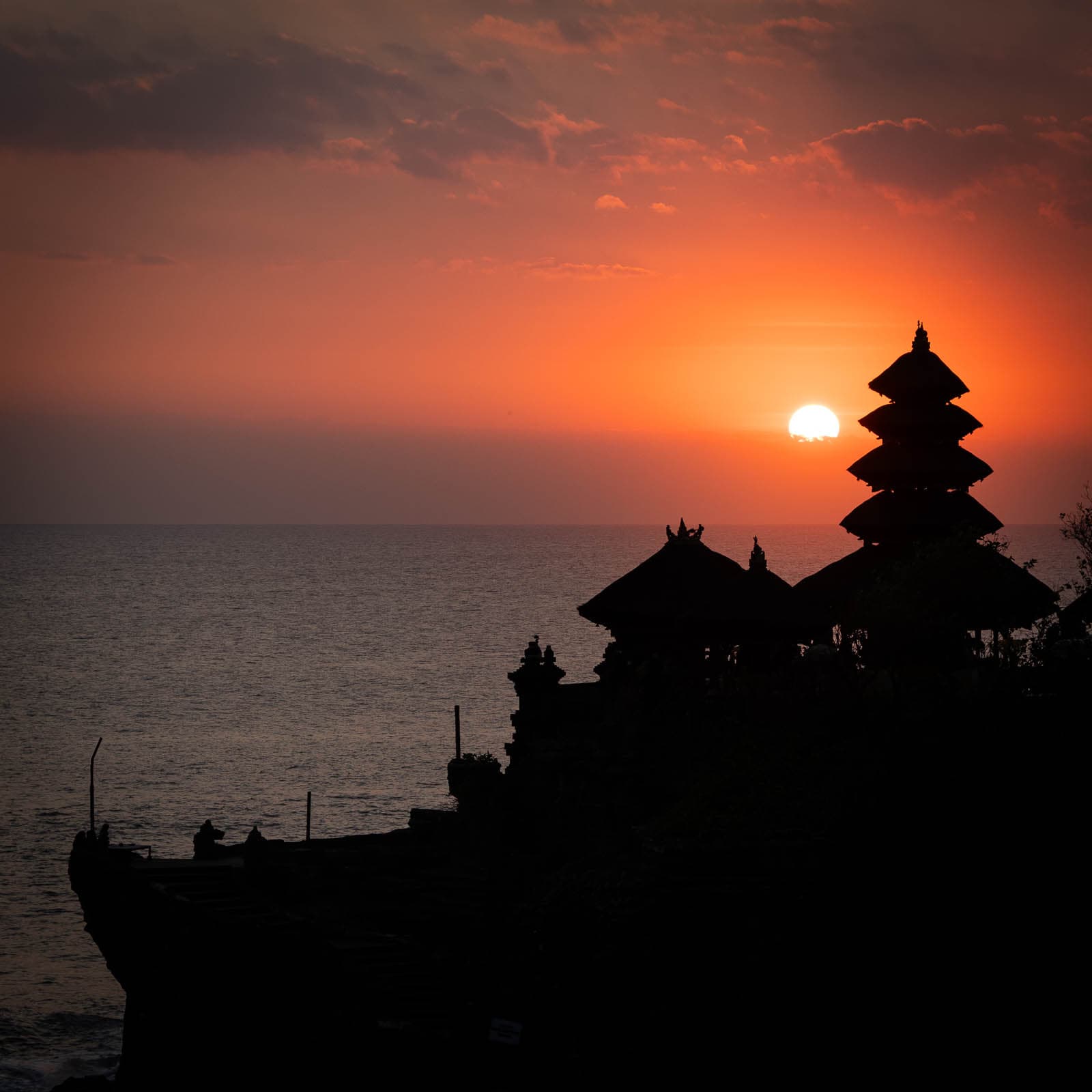
- The temple silhouette against the sunset - the iconic Bali postcard shot
- At low tide, walk across to the base of the rock and receive a blessing with holy spring water
- Pura Batu Bolong - a sister sea temple on a natural rock arch, a five-minute walk along the cliff path
- Plenty of warungs and cafés on the cliff for a drink while waiting for the sunset
Good to know
- Arrive 90 minutes before sunset - both for the light and to find parking
- Check the tide chart: at high tide you cannot reach the base of the temple
- It gets very busy. If you want photos without crowds, come at sunrise instead - the temple faces west so the light is softer but it is far quieter
- Entry around IDR 75,000 per person
Last updated
Interested in visiting Tanah Lot?