History
A volcano inside a volcano
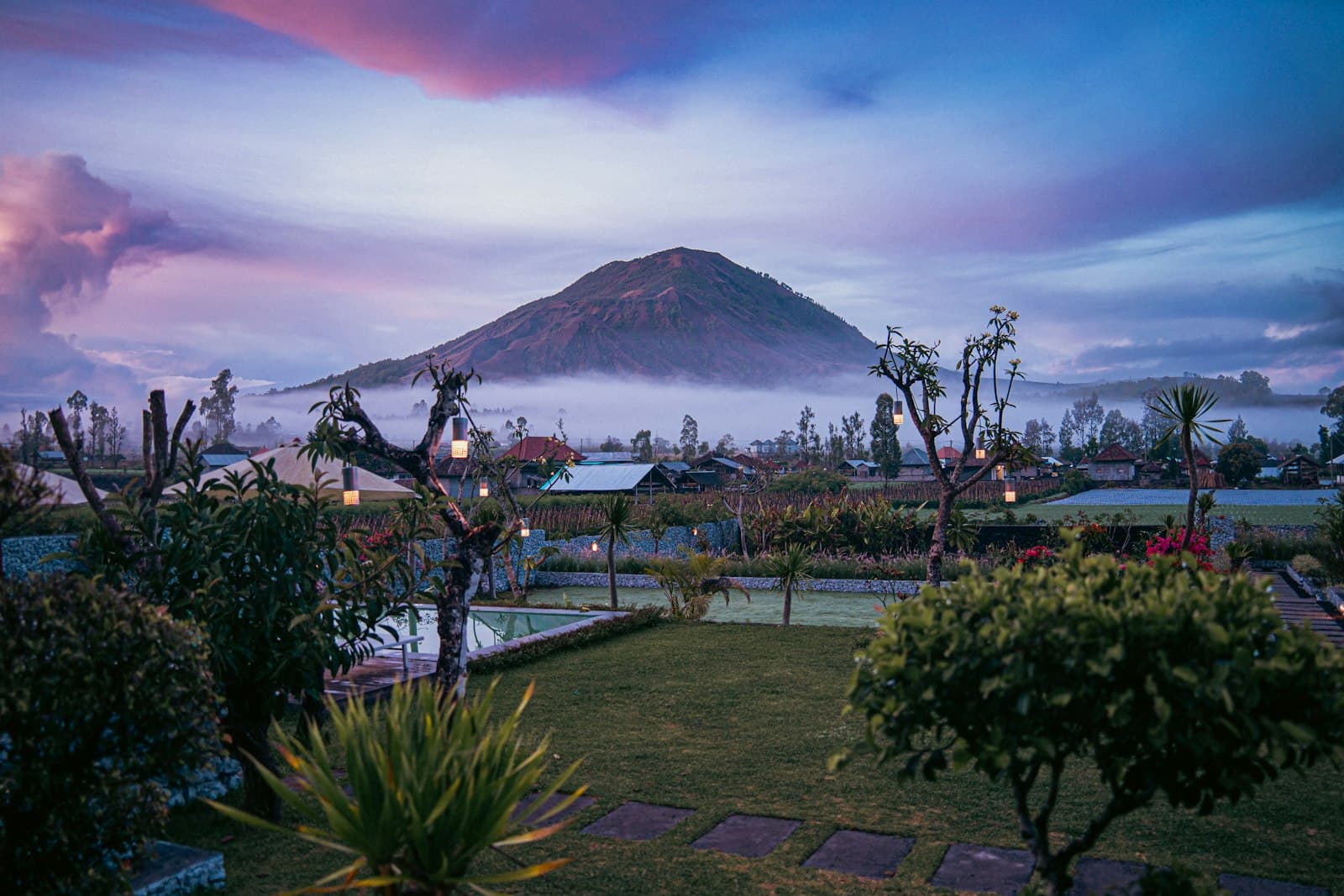
Mount Batur, the active stratovolcano at the heart of Kintamani, sits inside the rim of a much larger ancient caldera - the bowl you stand on at the Penelokan viewpoint is the wall of that older crater, formed in a vast eruption around 30,000 years ago. The smaller Batur cone has grown up inside the bowl since, fed by the same magma chamber that produced the original blast.
Its most recent significant activity was in 2000, when a series of small eruptions sent ash drifting across central Bali for several weeks. At the foot of the cone lies Lake Batur, the largest crater lake on the island and the source of irrigation water for most of central and southern Bali.
The Bali Aga of Trunyan
On the eastern shore of Lake Batur - reachable only by boat - lies Trunyan, one of a small number of Bali Aga villages. The Bali Aga are the descendants of the original Balinese, who arrived on the island long before the 15th-century Majapahit invasion from Java. While most of Bali eventually adopted the courtly Javanese-flavoured Hinduism of the Majapahit, the Bali Aga held onto an older animist tradition. Trunyan today preserves practices that elsewhere on the island vanished centuries ago - including, most famously, a funerary rite involving no cremation at all.
Culture & context
The lake-goddess Dewi Danu
Above the village of Songan, on the inner caldera rim, stands Pura Ulun Danu Batur - one of the most important water-temples in Bali. It is dedicated to Dewi Danu, the goddess of lakes and rivers, and serves as the spiritual head of the entire subak network that draws from Lake Batur. In Balinese sacred geography, water flows downhill from this temple - physically and spiritually - to every rice paddy as far south as the coast, which is why the priests of Ulun Danu have historically held influence over the lowland courts that depend on their blessing. Its ritual partner is Pura Ulun Danu Beratan in the cool highlands of Bedugul, the second of Bali’s great lake temples.
Myths & legends
The Taru Menyan burial tradition
In Trunyan, bodies are not cremated. Instead, the dead are wrapped in cloth, placed in open bamboo cages, and laid out on a stone platform beneath a single ancient tree - the Taru Menyan, or “fragrant tree”. The tree gives off a chemical that neutralises the smell of decomposition, allowing eleven bodies to lie in the open air at any one time without disturbing the surrounding village. The skulls of those who have decomposed are arranged on a separate stone shelf. Boats can be hired from Kedisan to visit the site; visitors are asked to behave with respect and not to photograph the bodies directly.
Kebo Iwa and the making of the lake
One Balinese origin story explains the caldera as the work of the giant Kebo Iwa - a hero of the pre-Majapahit kingdom of Bedulu - who is said to have dug the lake basin with his bare hands to win the favour of a princess he loved. The story carries an undertone of loss: Kebo Iwa was eventually tricked into his own death by the Javanese conqueror Gajah Mada, ending the kingdom of Bedulu and beginning the long Majapahit-influenced era. The lake remains as his memorial.
What to see
- Mount Batur sunrise trek - roughly 2 hours up, with a guide, to watch the sun rise over the caldera
- Penelokan viewpoint and the warungs and cafés along the rim road
- Hot springs at Toya Bungkah, on the lake shore
- Pura Ulun Danu Batur, the lake-goddess temple
- A boat trip across the lake to Trunyan village
Good to know
- The trek requires a licensed local guide - usually around IDR 400–500k per person, including breakfast at the summit
- Bring warm layers. It is genuinely cold before dawn at the top, even when it is 30°C in Kuta
- A 3:30am pickup from south Bali is normal - you sleep in the car on the way up
- If you don’t want the hike, the Penelokan rim drive alone is worth the trip
Last updated
Interested in visiting Kintamani?