History
The temple on the lake
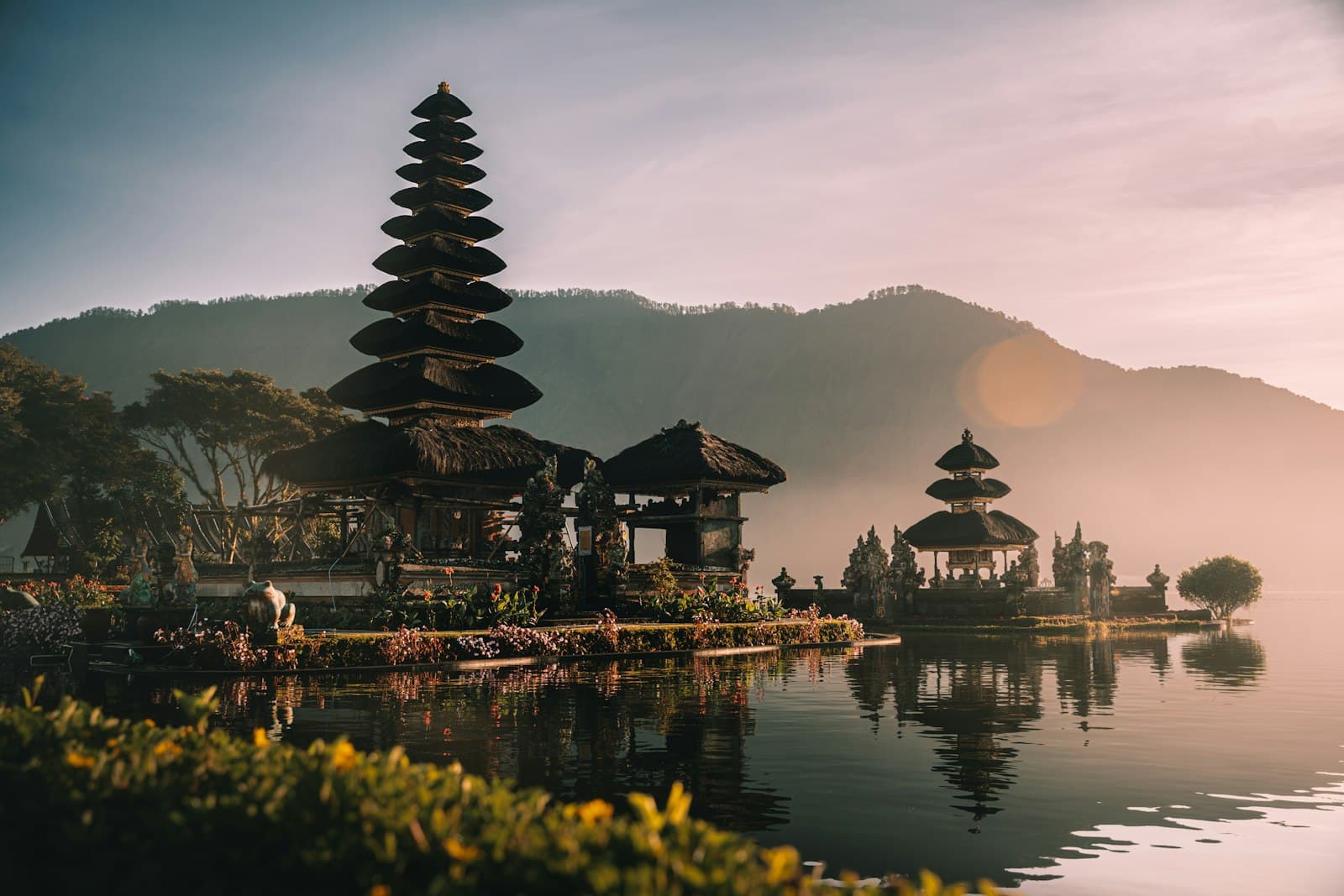
Pura Ulun Danu Beratan was built in 1633 by Cokorda I Mengwi, king of the highland kingdom of Mengwi, on the southern shore of Lake Beratan - the crater of an old volcano in the central Bali highlands. It is dedicated to Dewi Danu, the goddess of lakes and rivers, and at certain water levels its principal meru appears to float on the surface of the lake. The image is so familiar to Indonesians that it has been printed on the back of the IDR 50,000 banknote for decades.
The temple complex is unusual in one respect: alongside the Hindu shrines it includes a Buddhist stupa, a quiet reminder of the pre-Majapahit centuries when Buddhism and Hinduism coexisted on the island. It is one of the few places in modern Bali where this layered religious history is visible to a casual visitor.
A highland crossroads
Bedugul sits at the watershed of central Bali, in a cool basin of three crater lakes - Beratan (the famous one), and the quieter twin lakes Buyan and Tamblingan just to the north-west. From here, rainwater feeds the subak irrigation networks that run south to the rice fields of the coast. The climate is sharply different from the rest of the island - cool enough at 1,200 metres that you may need a jacket in the evening - and the area has long been a refuge from the heat of the lowlands.
In 1959 the Indonesian government opened the Bali Botanical Garden (Kebun Raya Bali) on the slopes above the lake - 158 hectares, the only botanical garden in Indonesia, and a quiet mossy half-day in its own right.
Culture & context
Water as Bali’s lifeblood
Lake Beratan is one of Bali’s four sacred lakes. The most important of the four sits inside the caldera at Kintamani, and the two great lake temples - Pura Ulun Danu Batur up there and Pura Ulun Danu Beratan here - are ritually paired. Together they preside over the water cycle that the entire island depends on: rain falls in the highlands, fills the lakes, and is released through the subak networks down to the rice fields and out to the sea. To stand beside either temple is to stand at the source of the irrigation that has shaped Balinese society for a thousand years.
What to see
- Pura Ulun Danu Beratan - the temple complex on the lake shore, with its iconic meru towers reflected in the water
- Bali Botanical Garden (Kebun Raya) - 158 hectares of cool highland forest, orchid collections, and the Treetop Adventure Park inside it
- Bedugul market - the highland produce market, famous for strawberries, vegetables, flowers, and ornamental plants
- The twin lakes of Buyan and Tamblingan, a short drive north - quieter and far less touristed
- Combine with Tanah Lot on the way back south for a full west-coast day
Good to know
- Bring a light layer - at 1,200 metres the air is noticeably cooler, especially in the early morning and after sunset
- The temple is busiest from late morning when the tour buses arrive; sunrise gives you the best light and the fewest crowds
- Entry to Pura Ulun Danu Beratan around IDR 75,000; the botanical garden has its own ticket at around IDR 20,000
- Easy day trip from Ubud (about an hour each way) or combined with Tanah Lot on the way back south
Last updated
Interested in visiting Bedugul?