History
Origins
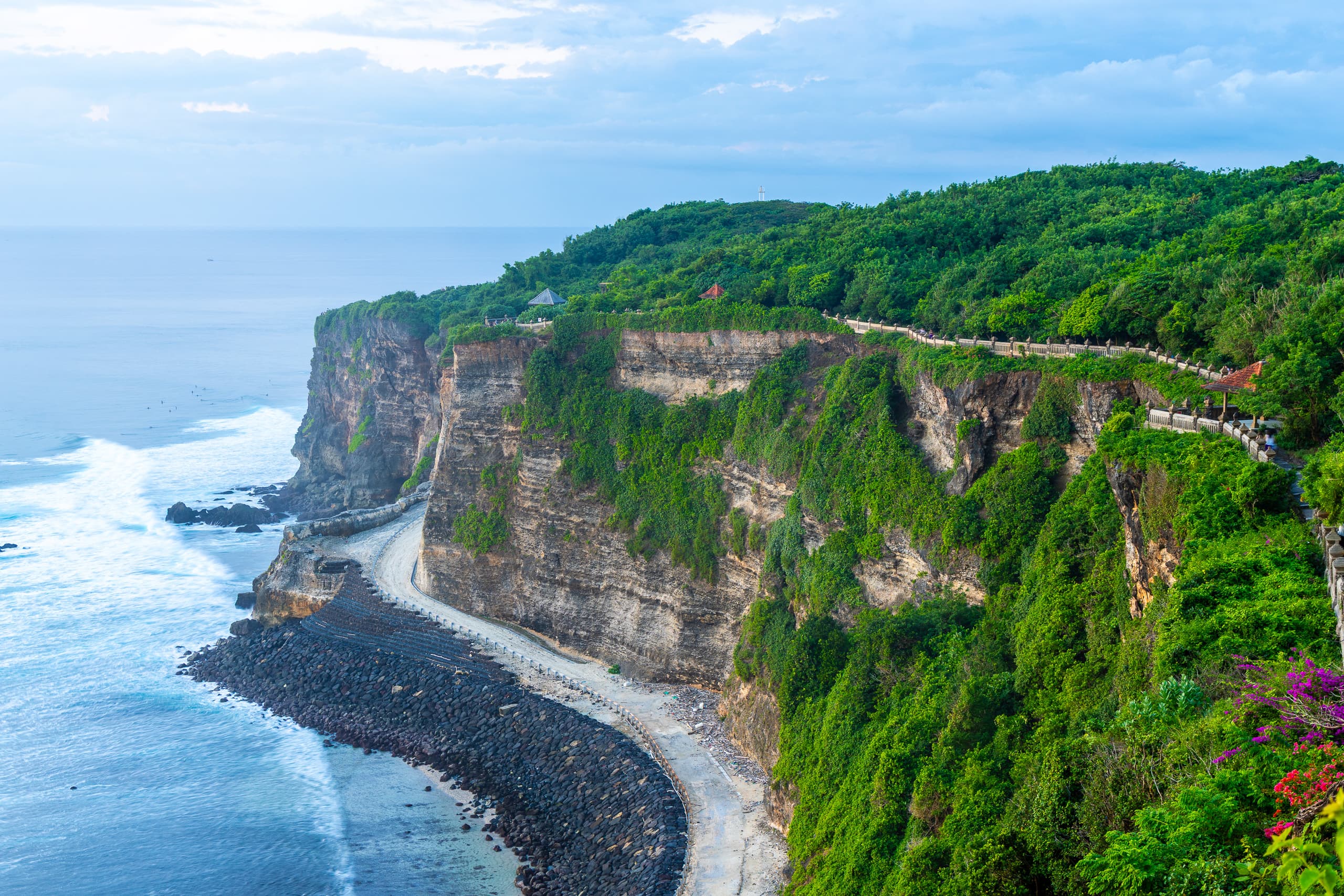
Pura Luhur Uluwatu was founded in the 11th century by the Javanese sage Empu Kuturan, who travelled to Bali to establish a network of directional temples that would anchor the island spiritually. The cliff he chose at the south-western tip of the Bukit peninsula already held local significance - its sheer drop to the open ocean made it a natural threshold between the human world and the spirits of the sea.
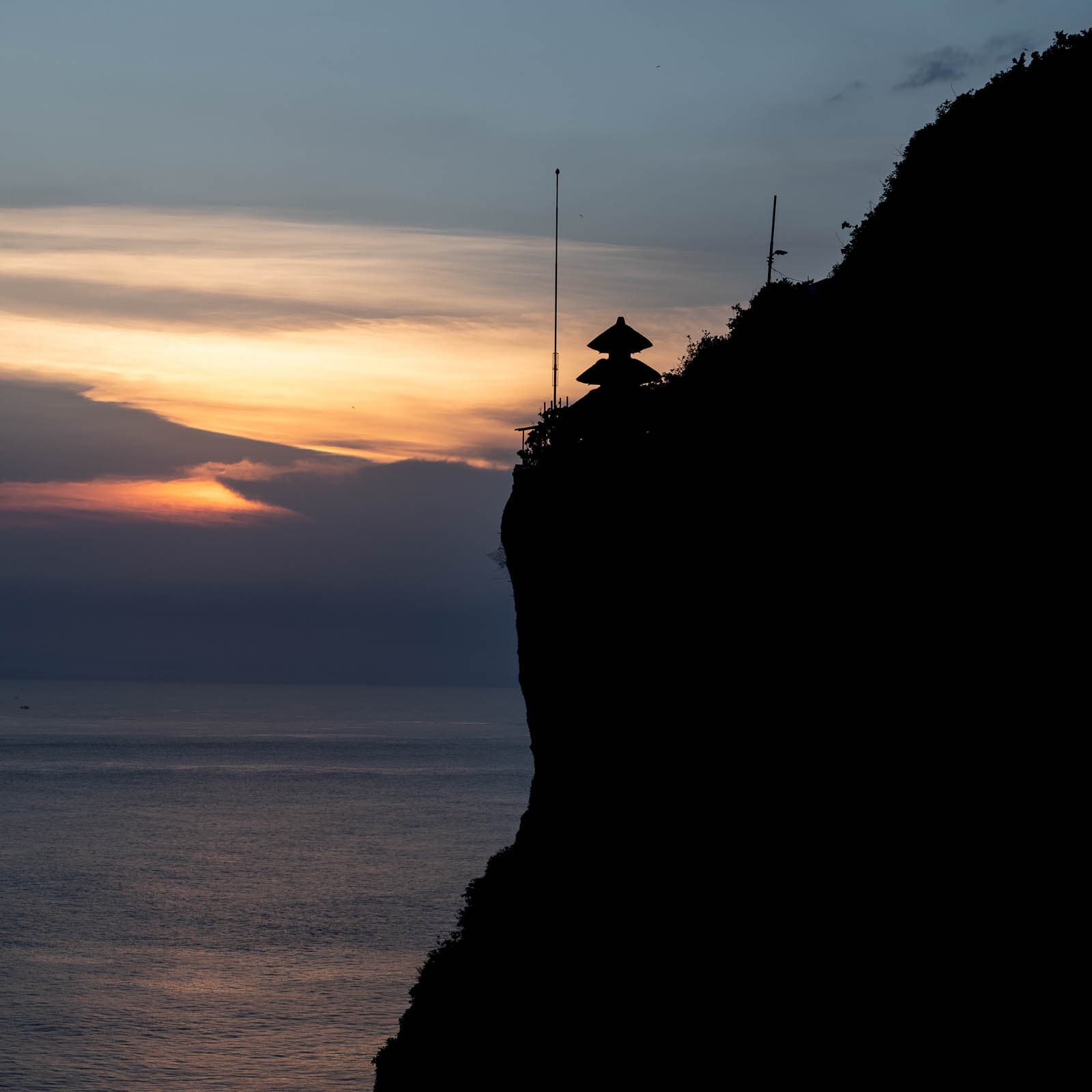
Five centuries later, the wandering priest Dang Hyang Nirartha expanded the temple and added the meru - the multi-tiered shrines that still dominate the silhouette. Nirartha was the architect of much of Bali’s coastal sacred geography, and according to local tradition he chose Uluwatu as the place where he would achieve moksha, release from the cycle of rebirth, vanishing from the cliff in a flash of light.
A place in Bali’s sacred map
Uluwatu is one of Bali’s six sad kahyangan - the spiritual pillars said to protect the island from harm. The others sit at Besakih (the mother temple on Mount Agung), Lempuyang, Goa Lawah, Pusering Jagat, and Pura Luhur Batukaru. Together they form a sacred map: each one anchors a direction, and Uluwatu, the most westerly and the most exposed, guards Bali from the spirits of the open sea.
Culture & context
The kecak dance
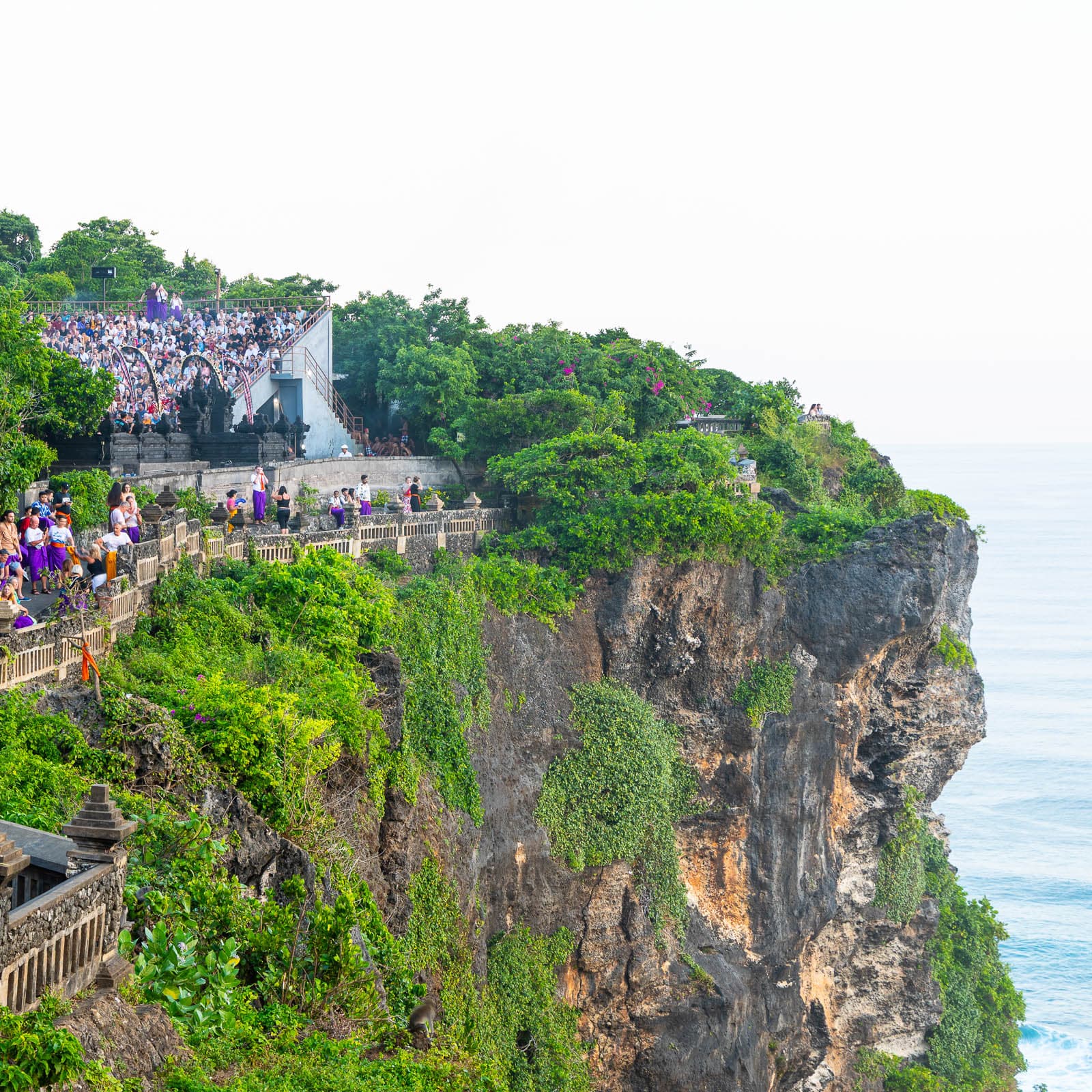
The kecak fire dance performed each sunset is a relatively modern hybrid. The chanting - that hypnotic cak-cak-cak of fifty or more bare-chested men in a circle - comes from a much older trance ritual called sanghyang, used to commune with spirits. In the 1930s the German painter Walter Spies, working with the Balinese dancer Wayan Limbak, adapted the ritual into a narrative performance of the Ramayana: Prince Rama’s quest to rescue his abducted wife Sita from the demon king Ravana. It became Bali’s most famous performance, and Uluwatu, with its open-air amphitheatre at the cliff’s edge, remains its most dramatic setting.
Visiting a Balinese temple
Like all Balinese temples, Uluwatu is an active place of worship rather than a museum. A sarong (provided at the gate) and modest dress are required. Women who are menstruating are traditionally asked not to enter the inner courtyards - a rule rooted in Hindu beliefs about ritual purity rather than a judgement on the visitor. Photography is generally welcome on the cliff paths but not inside the shrines themselves, and during ceremonies the temple closes to tourists entirely.
Myths & legends
Nirartha’s ascent
Local guides will point out a particular outcrop on the cliff where Nirartha is said to have taken his final earthly step. Some versions of the story say his walking stick remains, transformed into a rock formation visible from the southern cliff path. The macaques that throng the temple are sometimes described as Nirartha’s appointed guardians - opportunistic thieves of phones and sunglasses, but spiritually significant nonetheless.
The macaques
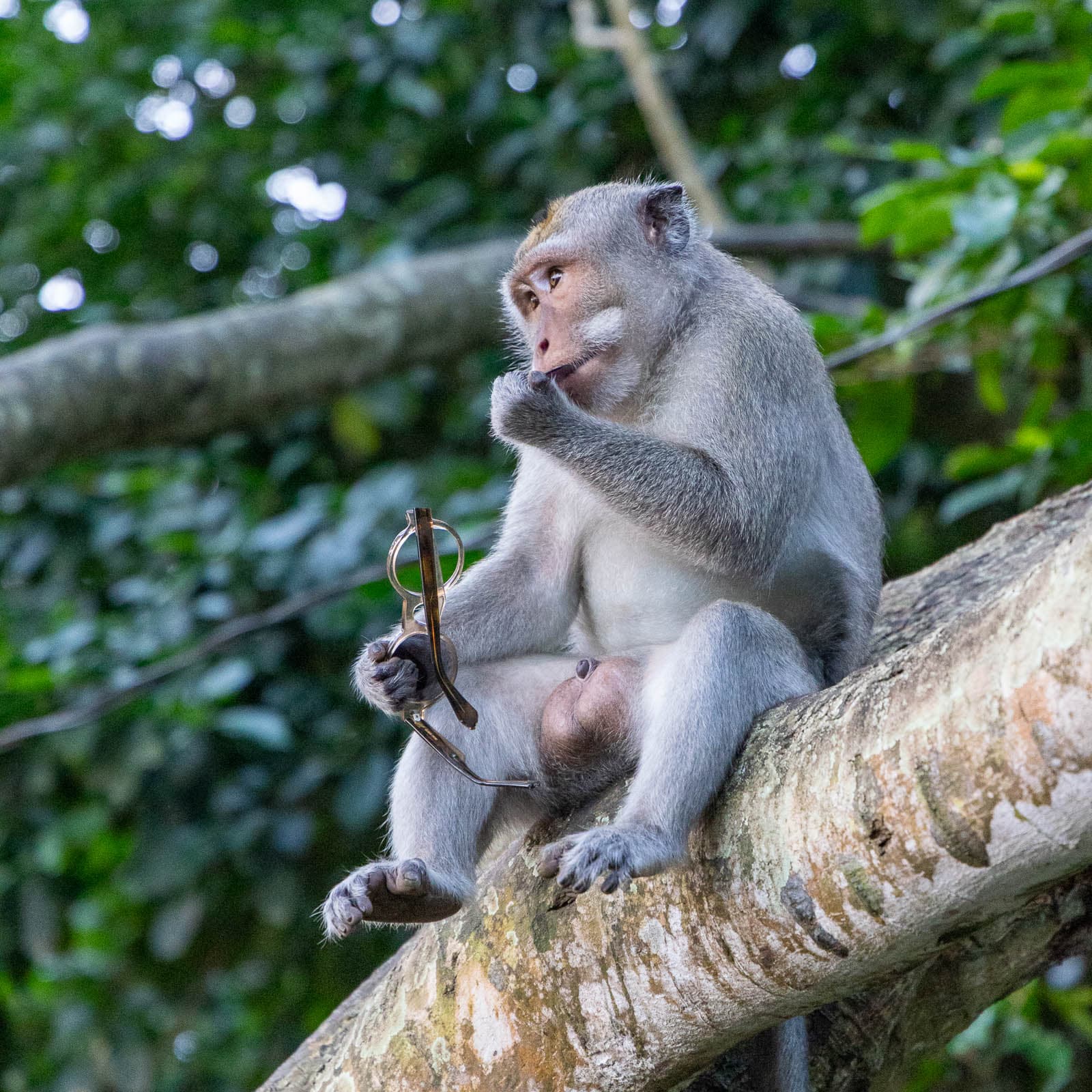
The grey long-tailed macaques that patrol the cliff paths are part of the visit - not a sideshow but a presence you’ll negotiate with from the moment you reach the gates. They live in troops of a hundred or more, and they have learned, over generations, to treat tourists as a reliable source of food.
What’s striking about the Uluwatu macaques specifically is the trade. Researchers have spent years documenting it: the monkeys snatch phones, sunglasses, hats, flip-flops, water bottles - anything portable - then wait for a temple attendant to negotiate a swap. They prefer high-value items (a smartphone is worth more fruit than a hair tie) and hold out longer for them. It is, by any reasonable definition, a learned economy.
For visitors, that means a few simple precautions. Tuck sunglasses inside a bag before you reach the temple, not after. Don’t carry anything loose in your hands. If a macaque does take something, don’t chase it - the staff at the gate have negotiated thousands of these exchanges and will resolve it for the price of a banana or two. Avoid direct eye contact, and don’t bare your teeth in a smile, which to a macaque reads as aggression.
In Balinese tradition the monkeys are not pests but guardians - descendants, some say, of the troops Nirartha left to watch over the cliff after his ascent. Whether you take that literally or not, they are unquestionably the temple’s permanent residents. The rest of us are passing through.
What to see
- The temple itself, with the dramatic ocean view from the cliff path
- Kecak fire dance at sunset in the open-air amphitheatre - a chanted retelling of the Ramayana under a sky that turns orange
- Surf breaks far below the cliffs (world-famous, but strictly for advanced surfers)
- Single Fin and other clifftop bars nearby for a sunset drink
Good to know
- Modest dress required - sarongs are provided at the entrance, but bring your own if you can
- Watch your sunglasses, hats, and phones - the resident macaques are notorious thieves
- Kecak tickets sell out on busy evenings; aim to arrive an hour before the 6pm show
- Entry around 60,000 IDR; kecak performance separate at around IDR 150,000
Last updated
Interested in visiting Uluwatu?